Storm Drain Installation & Stormwater Infrastructure
Complete storm drain systems including pipe installation, catch basins, manholes, and retention basin construction for commercial and municipal projects.
Effective stormwater management is a critical component of any development project, and Walberg, Inc. has been building storm drain infrastructure across the Northern Sacramento Valley since 1999. From small commercial parking lot drainage systems to large municipal storm drain trunk lines and stormwater retention basins, our underground utility crews deliver reliable stormwater infrastructure that protects properties, roadways, and downstream water quality for decades.
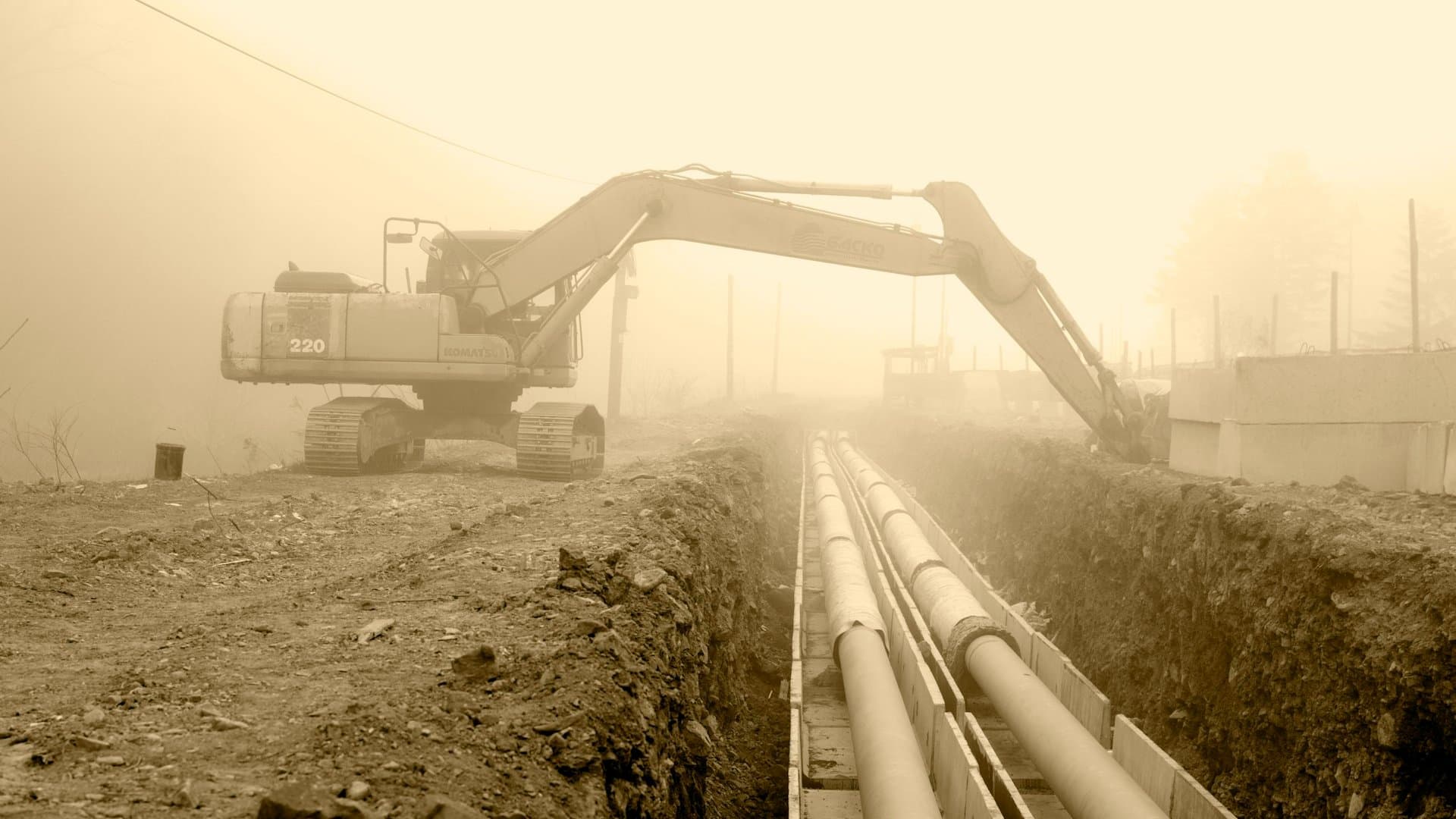
Storm drain installation requires precise grade control, proper bedding and backfill procedures, and thorough understanding of hydraulic design principles. Our crews install reinforced concrete pipe (RCP), corrugated metal pipe (CMP), high-density polyethylene (HDPE) pipe, and PVC storm drain pipe in sizes ranging from small collection lines to large trunk mains. We set precast concrete catch basins, junction boxes, and manholes, ensuring proper grade rings, frames, and covers are installed to match finished surface elevations. Every component is installed to the project plans and governing agency standards, and we coordinate all required inspections before backfill.
Beyond pipe and structure installation, Walberg, Inc. constructs stormwater retention and detention basins that are increasingly required by local jurisdictions to manage runoff from new development. These basins require precise earthwork to achieve the designed storage volume and outlet control, and our GPS-equipped excavation equipment ensures that basin dimensions, slopes, and invert elevations meet the engineered specifications. We also install outlet structures, overflow weirs, and erosion protection as specified in the stormwater management plan.
Our experience with storm drain work extends across public and private projects throughout Tehama, Butte, Shasta, Glenn, Colusa, and surrounding areas. We maintain strong working relationships with local public works departments and understand the specific standards and inspection requirements that apply in each jurisdiction. With our fleet of over 100 pieces of company-owned heavy equipment, experienced trench crews, and 26 years of underground utility experience, Walberg, Inc. is the contractor that engineers and developers trust for their stormwater infrastructure needs. Our CSLB license #898860 with A-classification covers the general engineering work required for storm drain and drainage improvement projects.
What's Included
- Storm drain pipe installation (RCP, CMP, HDPE, PVC)
- Precast catch basin and inlet structure installation
- Manhole and junction box installation
- Storm drain trunk line construction
- Stormwater retention and detention basin construction
- Outlet structure and overflow weir installation
- Trench excavation with proper bedding and backfill
- Grade ring and frame adjustment to finished surface
- CCTV inspection coordination
- Surface restoration and erosion control
OUR PROCESS
How we deliver storm drain installation.
Plan Review & Constructability Assessment
We review the stormwater management plan and construction drawings, identify potential conflicts with existing utilities, assess site access and staging requirements, and develop a construction sequence that coordinates with other site work.
Permitting & Material Procurement
We secure the required encroachment and construction permits, order pipe, structures, and specialty materials per the project specifications, coordinate utility locates, and schedule pre-construction meetings with the governing agency inspector.
Pipe Installation & Structure Setting
Our crews excavate trenches, install bedding material, lay pipe to grade using laser alignment, set catch basins, manholes, and junction boxes, and backfill in compacted lifts. Each segment is inspected and approved before backfill, and we coordinate CCTV inspection of completed lines.
Testing, Restoration & Final Acceptance
We complete all required testing including mandrel testing and video inspection, restore disturbed surfaces, install permanent erosion control measures, and coordinate the final walkthrough and acceptance with the governing agency or project engineer.
EQUIPMENT
Equipment used on this service.
AREAS SERVED
Available across Northern California.
RELATED SERVICES
Other services you might need.
FAQ
Frequently Asked Questions
Storm drain pipe sizing is determined by a hydraulic analysis that considers the drainage area, rainfall intensity, soil permeability, and downstream capacity. This analysis is typically performed by the project civil engineer as part of the stormwater management plan. Walberg, Inc. installs whatever pipe size the engineer specifies, from small 6-inch collection lines to large 48-inch or larger trunk mains.
Many jurisdictions in our service area now require stormwater retention or detention for new commercial development to manage increased runoff and protect downstream properties. Whether a basin is required and what size it needs to be is determined by your project civil engineer and the local planning department. Walberg, Inc. constructs basins to engineered specifications.
Installation timelines depend on the total length of pipe, the number of structures, trench depth, and soil conditions. A small commercial site might take one to two weeks, while a large subdivision storm drain system could take several weeks or more. We provide detailed schedules as part of our project planning.
Yes, we regularly install storm drain improvements in existing developed areas. This requires careful traffic control planning, utility coordination, and surface restoration. We saw-cut pavement, install the drainage improvements, backfill and compact, and restore the pavement surface. We work to minimize disruption to businesses and traffic flow.
A retention basin holds water permanently and slowly infiltrates it into the ground. A detention basin temporarily stores stormwater and releases it at a controlled rate through an outlet structure. The type required for your project depends on local regulations, soil conditions, and the stormwater management goals established by the project engineer.